

Air Conditioning Installation in San Leandro, CA
A new air conditioner should do more than produce cold air. It should be sized for the home, supported by adequate airflow, connected to suitable electrical service, and installed so that the indoor and outdoor components work together correctly.
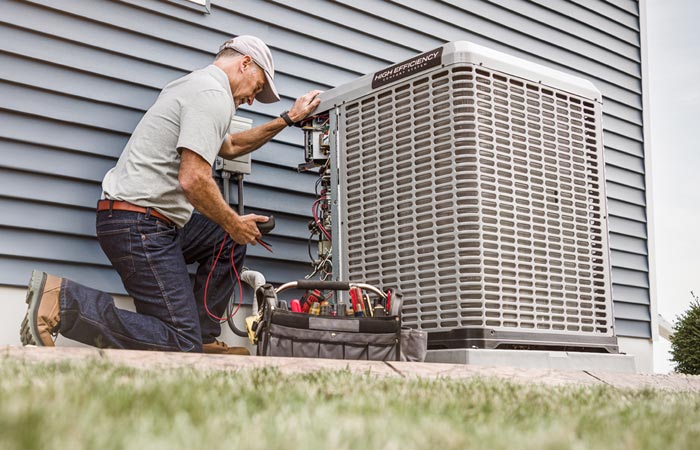
Harry Clark Heating & Air Conditioning provides professional air conditioning installation in San Leandro, CA for homeowners replacing aging equipment or adding central cooling to a home that needs better warm-weather comfort. We evaluate the property, existing system, ductwork, return-air capacity, electrical requirements, drainage, and room-by-room comfort concerns before recommending equipment.
This planning helps reduce the risk of common installation problems such as frequent cycling, weak airflow, uneven temperatures, excessive noise, and equipment that cannot deliver its rated performance. The objective is not simply to replace one unit with another, but to install a cooling system that fits the home as it exists today.
Central Air Conditioning for San Leandro Homes
San Leandro’s climate is generally moderate, but cooling demand can change considerably across the city and throughout the day. Homes closer to the bay may experience cooler mornings, while properties farther inland or exposed to afternoon sun can warm more quickly later in the day.
Homes in Broadmoor, Estudillo Estates, Washington Manor, Marina Faire, Bay-O-Vista, and other San Leandro neighborhoods also differ in age, construction, insulation, window area, and duct design. An addition, converted room, or remodeled floor plan may have changed the home’s cooling requirements without a corresponding change to the HVAC system.
Harry Clark’s broader heating and air conditioning services in San Leandro consider how equipment, airflow, ductwork, controls, and the building work together. These factors are especially important when adding central cooling to an older home or replacing equipment that has never kept every room comfortable.
When Should You Consider Air Conditioner Replacement?
An older air conditioner does not need to be replaced solely because of its age. Repair may still be reasonable when the problem is isolated, the needed parts are available, and the system continues to provide dependable cooling.
Replacement may deserve consideration when:
- The system requires increasingly frequent repairs
- A major component has failed
- Replacement parts are becoming difficult to obtain
- The air conditioner runs for long periods without cooling the home adequately
- Temperatures remain noticeably uneven between rooms
- The equipment has become unusually noisy
- The system starts and stops repeatedly
- Cooling performance has declined despite appropriate service
- The existing equipment no longer fits the home after remodeling or additions
- You want to add central cooling to a home that does not currently have it
The condition of the ductwork, indoor equipment, electrical system, thermostat, and drainage should be considered along with the outdoor unit. Replacing only one component without checking the rest of the system can leave existing comfort and airflow problems unresolved.
Proper Air Conditioner Sizing Requires More Than Square Footage
The capacity of a central air conditioner should reflect the home’s actual cooling requirements. Square footage is one factor, but it does not account for differences in insulation, windows, ceiling height, sun exposure, air leakage, occupancy, or room layout.
Equipment sizing should consider:
- The home’s calculated cooling load
- Window size, orientation, and shading
- Insulation and air leakage
- Ceiling height and room volume
- Afternoon sun exposure
- Number of occupants and normal household use
- Heat-producing appliances and electronics
- Duct capacity and return-air pathways
- Changes created by additions or remodeling
An oversized air conditioner may satisfy the thermostat quickly while leaving other rooms uncomfortable. Frequent starting and stopping can also create unnecessary equipment wear. An undersized system may operate for extended periods and still struggle during warmer afternoons.
The appropriate system is not automatically the largest unit available or the same capacity as the equipment being removed. Harry Clark Heating & Air Conditioning evaluates the home and explains why the recommended capacity and equipment configuration are appropriate for the project.
Ductwork and Airflow Affect New-System Performance
The air conditioner can only provide dependable comfort if the duct system can move the required amount of air. Undersized returns, restricted ducts, leakage, damaged insulation, closed dampers, and poorly placed registers can all reduce performance.
Before installing new equipment, accessible supply and return ducts should be evaluated for conditions that may interfere with airflow. If the existing system has always left certain rooms uncomfortable, repeating the same equipment arrangement without examining the ducts may reproduce the same problem.
Duct replacement is not automatically required with every installation. Existing ducts may remain usable when they are appropriately sized, reasonably sealed, and capable of supporting the new equipment. When improvements are recommended, the contractor should explain which condition needs correction and how it affects the installation.
Electrical, Drainage, and Equipment Placement
New air-conditioning equipment must be connected to electrical service that meets the system’s requirements. The installation plan may need to consider circuit capacity, disconnects, wiring, indoor equipment compatibility, thermostat controls, and access for future service.
Condensate drainage is also important. As the indoor coil removes moisture from the air, the collected water must drain away safely. Drain routing, slope, access, and applicable safety controls should be checked during installation.
The outdoor unit needs adequate space for airflow and service access. Placement should also consider nearby windows, property use, vegetation, noise, and the route between the indoor and outdoor equipment.
What Happens During Air Conditioning Installation?
The details vary according to the equipment and project scope, but a central AC installation may include:
- Protecting the work area and preparing equipment access
- Removing old equipment when replacement is required
- Inspecting the supporting indoor components
- Setting the indoor and outdoor equipment
- Completing refrigerant-line connections
- Completing electrical and control connections
- Connecting and checking condensate drainage
- Configuring the thermostat
- Checking filter access and airflow
- Starting and testing the system
- Confirming that the equipment responds to the controls
- Explaining basic system operation to the homeowner
Startup and testing are essential parts of the installation. Equipment that turns on is not necessarily operating correctly. Airflow, temperatures, controls, drainage, electrical operation, and refrigerant performance should be evaluated according to the equipment and installation requirements.
Understanding SEER2 and Cooling Efficiency
Air conditioners are rated using SEER2, which provides a standardized method for comparing seasonal cooling efficiency. A higher rating can indicate lower electricity use under standardized test conditions, but the rating does not guarantee how efficiently the complete system will perform in a particular home.
Improper sizing, restricted airflow, duct leakage, incorrect system setup, and poor thermostat placement can limit the performance of high-efficiency equipment. Installation quality and the condition of the rest of the system remain important regardless of the efficiency rating.
When comparing equipment, homeowners should consider the efficiency rating, purchase cost, expected cooling use, available features, noise, controls, and compatibility with the home. Harry Clark Heating & Air Conditioning explains these differences so the decision is based on the property and homeowner priorities rather than the rating alone.
Repair or Replace the Existing Air Conditioner?
Replacement should not be recommended before the existing system is properly evaluated. A repair may remain sensible when the problem is isolated, the equipment is otherwise dependable, and the required part is available.
Homeowners experiencing an active cooling problem can schedule air conditioning repair in San Leandro to identify the cause before deciding whether replacement is necessary. The decision should compare the repair cost, system condition, recent history, expected service life, comfort, and whether a new installation would correct the underlying problem.
Protecting Your New Air Conditioning System
After installation, homeowners should understand how to operate the thermostat, locate and check the filter, keep the outdoor equipment accessible, and recognize changes that may require professional attention.
Filter needs vary according to the equipment, filter type, household conditions, pets, and cooling use. A heavily restricted filter can reduce airflow and place unnecessary strain on the system. The outdoor unit should also remain clear of loose debris and surrounding materials that interfere with airflow or service access.
Professional maintenance provides an opportunity to inspect operating performance, electrical components, airflow, coils, drainage, and controls as the equipment ages. Maintenance cannot prevent every failure, but it can help identify developing conditions and keep the system operating under appropriate conditions.
Why Choose Harry Clark for AC Installation?
Harry Clark Heating & Air Conditioning installs cooling systems for homeowners in San Leandro and throughout the East Bay. Our process begins with understanding the property, the existing equipment, and the comfort concerns the homeowner wants the new system to address.
Central air-conditioning installation involves equipment selection, sizing, airflow, ductwork, electrical requirements, drainage, controls, startup, and final testing. We consider these parts together rather than treating installation as a simple equipment exchange.
Before the project moves forward, we explain the recommended equipment, installation requirements, available efficiency levels, and related improvements that may be necessary. The goal is to help homeowners make informed decisions and install a system suited to the home.
Request an Air Conditioning Installation Estimate
If you are replacing an aging air conditioner or considering central cooling for your San Leandro home, Harry Clark Heating & Air Conditioning can evaluate the property and explain the available installation options.
Call (510) 444-1960 or use the online estimate form to discuss air conditioning installation or replacement in San Leandro, CA.
Frequently Asked Questions About AC Installation
How is the correct air-conditioner size determined?
System sizing should consider the home’s cooling load, insulation, windows, sun exposure, air leakage, ceiling height, room layout, duct condition, and occupancy. Square footage alone is not enough to select equipment accurately.
Can central air conditioning be added to an older San Leandro home?
In many cases, yes. The installation plan must consider available duct space, electrical capacity, equipment placement, drainage, access, and how the home’s construction affects airflow.
Will my existing ductwork need to be replaced?
Not automatically. Existing ducts may remain usable if they are appropriately sized, reasonably sealed, and capable of delivering the airflow required by the new equipment. Restricted or damaged ducts may need improvement.
How long does air-conditioning installation take?
The schedule depends on the equipment, access, ductwork, electrical requirements, drainage, permits, and additional improvements included in the project. The expected timeline should be explained after the installation scope is evaluated.
Does a higher SEER2 rating always mean a better system?
A higher SEER2 rating indicates greater efficiency under standardized test conditions, but it does not guarantee better comfort. Sizing, airflow, duct condition, controls, installation quality, features, and expected cooling use should also guide the decision.
Should I repair or replace my existing air conditioner?
Repair may make sense when the problem is isolated and the system remains dependable. Replacement deserves consideration when failures repeat, a major component has failed, parts are difficult to obtain, or the equipment no longer provides acceptable cooling.
Schedule Estimate for Air Conditioning Installation