

Furnace Installation in Alameda, CA
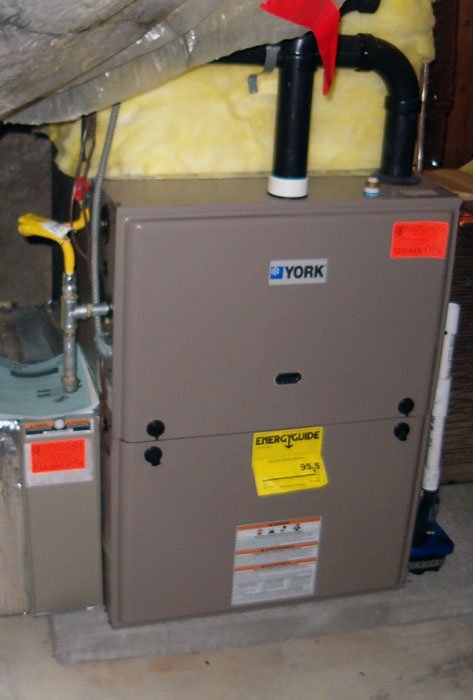
Harry Clark Heating & Air Conditioning provides professional furnace installation in Alameda, CA for homeowners replacing aging equipment, improving indoor comfort, or planning a more dependable heating system. We evaluate the home, existing furnace, ductwork, airflow, venting, and comfort concerns before recommending replacement equipment.
A furnace should be selected for the property rather than chosen by square footage or the size of the previous unit alone. Proper sizing and installation help the system maintain steady temperatures, operate efficiently, and deliver the airflow each part of the home requires.
Heating Considerations for Alameda Homes
Alameda’s winters are generally moderate, but cool mornings, damp weather, coastal air, and evening temperature changes still make dependable heating important. A furnace may not run as continuously as it would in a colder climate, yet it should be ready to heat the home evenly when needed.
Homes throughout the East End, West End, Fernside, Bronze Coast, and Bay Farm Island vary considerably in age, construction, insulation, layout, and duct design. Older Victorian, Craftsman, and bungalow-style properties may have additions, limited mechanical space, aging ducts, or air leakage that affects heating performance. Newer and remodeled homes may have different airflow or efficiency requirements.
These differences make an individual evaluation important. Replacing the existing furnace with equipment of the same capacity does not automatically correct uneven temperatures, noisy operation, restricted airflow, or excessive cycling.
When Should a Furnace Be Replaced?
A furnace does not need to stop working completely before replacement is considered. Some systems continue operating while requiring increasingly frequent repairs or struggling to maintain consistent comfort.
Conditions that may justify discussing furnace replacement include:
- Frequent breakdowns or repeated service calls
- A major component failure on an older furnace
- Difficulty obtaining appropriate replacement parts
- Uneven temperatures throughout the home
- Long operating cycles without adequate heating
- Frequent starting and stopping
- Increasing fuel use without a clear explanation
- Unusual operating noise or declining airflow
- Venting, combustion, or equipment-condition concerns
- A system that no longer fits the home after remodeling
Age is only one part of the decision. A well-maintained older furnace may remain serviceable, while a newer system with major damage or ongoing installation problems may be a less practical repair candidate.
Repair or Replace the Existing Furnace?
Replacement should not be recommended before the current system is properly evaluated. A repair may remain the sensible choice when the problem is isolated, the required part is available, and the furnace is otherwise in dependable condition.
Homeowners experiencing an active heating problem can schedule furnace repair in Alameda to identify the cause before deciding whether new equipment is necessary. A diagnostic visit can help distinguish a repairable control, airflow, electrical, ignition, or mechanical problem from a broader equipment concern.
The decision should compare the repair cost, condition of the furnace, recent service history, availability of parts, expected remaining life, comfort performance, and the improvements a replacement would provide. One repair does not automatically justify replacement, but repeated spending on a declining system may not offer good long-term value.
Why Correct Furnace Sizing Matters
A furnace that is too large can heat the space quickly and shut down before warmth is distributed evenly. This short cycling may create noticeable temperature swings, increase component wear, and leave rooms farther from the equipment less comfortable.
An undersized furnace may run for extended periods without maintaining the thermostat setting during cooler weather. It can also leave homeowners assuming the furnace is defective when the actual problem is insufficient capacity, excessive heat loss, or restricted airflow.
Proper sizing should consider more than the home’s square footage. Important factors include:
- Insulation levels and air leakage
- Window type, size, and orientation
- Ceiling height and room layout
- The number of exterior walls
- Home additions or remodeling
- Duct condition and available airflow
- Return-air capacity
- Alameda’s local winter conditions
- The location of the furnace and thermostat
The capacity of the old furnace may provide useful information, but it should not be treated as proof that the same size is correct. The previous equipment may have been oversized, undersized, or installed before improvements were made to the home.
Understanding Furnace Efficiency
Gas-furnace efficiency is commonly described by its Annual Fuel Utilization Efficiency rating, or AFUE. The rating estimates how much of the fuel consumed by the furnace is converted into usable heat under standardized conditions.
A higher AFUE rating can reduce fuel consumption, but the rating does not guarantee lower utility bills or better comfort in every home. Heating use, energy prices, equipment sizing, duct leakage, airflow, thermostat settings, and installation quality all affect actual operating costs.
Efficiency should therefore be considered alongside purchase price, available features, noise levels, controls, venting requirements, and expected heating use. The most efficient model is not automatically the best choice if it does not match the property or the homeowner’s priorities.
Evaluating Existing Ductwork and Airflow
A new furnace depends on the air-distribution system around it. Ductwork that is undersized, damaged, disconnected, poorly sealed, or excessively restrictive can prevent new equipment from performing as intended.
Before installation, accessible ducts and return-air pathways should be evaluated for conditions that may affect system performance. Warning signs can include weak airflow, excessive duct noise, rooms that consistently remain colder than others, or unusually large temperature differences between different parts of the home.
Existing ductwork does not automatically need to be replaced. It may remain usable when it is appropriately sized, reasonably sealed, and capable of moving the airflow required by the selected furnace. When problems are found, repairs or modifications should be discussed as part of the installation scope.
What Happens During Furnace Installation?
The exact installation scope depends on the equipment, access, ductwork, venting, fuel connection, electrical requirements, drainage, controls, and condition of the existing system. A typical furnace replacement may include:
- Reviewing the home’s heating needs and comfort concerns
- Inspecting the existing furnace and accessible ductwork
- Selecting equipment with appropriate capacity and features
- Explaining any duct, venting, electrical, or control improvements
- Safely disconnecting and removing the old equipment
- Positioning and connecting the replacement furnace
- Completing required fuel, electrical, venting, and drainage connections
- Connecting the thermostat and system controls
- Testing heating operation, airflow, temperature rise, and safety controls
- Reviewing system operation and filter requirements with the homeowner
Installation is not complete when the furnace simply turns on. Startup and testing help confirm that the equipment responds correctly, moves an appropriate amount of air, and operates within the manufacturer’s requirements.
Choosing Furnace Features and Controls
Furnaces are available with different efficiency levels, blower designs, heating stages, sound characteristics, and control options. The right combination depends on the home, budget, comfort priorities, and how frequently the system is expected to operate.
A single-stage furnace generally operates at one heating output. Two-stage and modulating equipment can adjust operation more closely to changing heating needs. Variable-speed blowers can provide more gradual airflow and may support quieter operation, filtration, zoning, and cooling performance when paired with compatible equipment.
More features do not automatically make a system appropriate for every property. Equipment compatibility, duct capacity, thermostat requirements, service needs, and project cost should all be considered before a furnace is selected.
Should You Consider a Heat Pump?
Replacing a furnace also creates an opportunity to compare other heating options. A heat pump transfers heat and can provide both heating and cooling from one electric system. Some homes may also use a heat pump with a furnace as part of a dual-fuel or hybrid arrangement.
Homeowners interested in electrification or replacing both heating and cooling equipment can review heat pump installation in Alameda. The comparison should consider the home’s heating and cooling loads, electrical capacity, ductwork, equipment location, comfort expectations, available space, and overall project cost.
A furnace may remain the practical choice for some properties, while a heat pump may better match the goals of others. The decision should be based on the home and homeowner priorities rather than a single equipment trend.
Protecting a Newly Installed Furnace
After installation, homeowners should understand how to operate the thermostat, locate the filter, recognize normal system behavior, and identify changes that may require professional attention.
Filter needs vary according to the equipment, filter type, household conditions, pets, indoor air concerns, and system use. A heavily restricted filter can reduce airflow and place unnecessary strain on the blower and furnace.
Professional furnace maintenance in Alameda provides an opportunity to inspect combustion, electrical components, airflow, venting, controls, and overall operating condition as the equipment ages. Maintenance cannot prevent every failure, but it can help identify developing concerns and support appropriate operation.
Why Choose Harry Clark for Furnace Installation?
Harry Clark Heating & Air Conditioning installs residential heating systems for homeowners in Alameda and throughout the East Bay. Our process begins with evaluating the property, existing equipment, ductwork, and the comfort concerns the new furnace is expected to address.
We consider furnace capacity, airflow, venting, controls, electrical requirements, accessibility, and startup as connected parts of the installation. Before work begins, homeowners should understand the recommended equipment, proposed installation scope, and any related improvements the project may require.
Homeowners who need help with other comfort concerns can also explore our heating and air conditioning services in Alameda.
Request a Furnace Installation Estimate
If you are replacing an aging furnace or planning a new heating system for your Alameda home, Harry Clark Heating & Air Conditioning can evaluate the property and explain the available options.
Call (510) 444-1960 to request an estimate for furnace installation or replacement in Alameda, CA.
Frequently Asked Questions About Furnace Installation
How do I know whether to repair or replace my furnace?
Repair may be appropriate when the problem is isolated and the furnace remains dependable. Replacement deserves consideration when failures are becoming frequent, a major component has failed, parts are difficult to obtain, or the system no longer heats the home effectively.
How is the correct furnace size determined?
Furnace sizing should consider the home’s heating load, insulation, windows, air leakage, ceiling height, layout, ductwork, and local climate. Square footage alone is not enough to select the proper equipment.
Can a new furnace use my existing ductwork?
Existing ducts may remain usable if they are properly sized, reasonably sealed, and capable of delivering the airflow required by the new furnace. Damaged, restricted, or poorly designed ductwork may need to be repaired or modified.
How long does furnace installation take?
The installation schedule depends on equipment access, ductwork, venting, gas and electrical requirements, permits, and whether other system improvements are needed. The expected timeline should be explained after the project is evaluated.
What does a furnace’s AFUE rating mean?
Annual Fuel Utilization Efficiency, or AFUE, estimates the percentage of fuel converted into usable heat under standardized conditions. A higher rating indicates greater fuel efficiency, but sizing, airflow, duct condition, and installation quality also affect operating performance.
Should I consider a heat pump instead of another furnace?
A heat pump may be worth considering when a homeowner wants one electric system for heating and cooling. The decision should account for the home’s heating and cooling needs, electrical capacity, ductwork, available space, comfort priorities, and project cost.
Schedule Furnace Installation Estimate


 Trustindex verifies that the original source of the review is Google.
 Trustindex verifies that the original source of the review is Google.
 Trustindex verifies that the original source of the review is Google.
 Trustindex verifies that the original source of the review is Google.

 Trustindex verifies that the original source of the review is Google.
 Trustindex verifies that the original source of the review is Google.
 Trustindex verifies that the original source of the review is Google.