

Furnace Repair in Piedmont, CA
A furnace that starts but never warms the house, shuts off after a few minutes, or makes a new grinding sound needs more than a guess about which part has failed. You need to understand the cause, whether the system can be repaired, and what the work will involve.
Harry Clark Heating & Air Conditioning provides furnace repair in Piedmont, CA, for residential heating problems involving ignition, airflow, thermostats, blowers, electrical components, and operating controls. We evaluate the symptoms alongside the equipment’s condition so the next step addresses the problem you are experiencing.
Call (510) 444-1960 or request a furnace repair appointment. Let us know whether the furnace has stopped completely or still runs intermittently. Our heating and air conditioning services also address related comfort concerns when the problem extends beyond the furnace itself.
Why Your Furnace Is Not Heating Properly
A furnace follows a sequence: the thermostat requests heat, the equipment completes its startup checks, heat is produced, and the blower distributes warm air. A fault at different points in that sequence can produce similar symptoms at the vents. Knowing whether the system never starts, starts without producing heat, or shuts down during operation helps guide the inspection.
The Furnace Will Not Turn On
A no-start problem can involve thermostat settings, the electrical supply, control wiring, or an operating or safety component. Some furnaces begin their startup sequence but stop before ignition. Tell the technician whether you hear a fan, clicking, or other activity when the thermostat calls for heat. That observation is useful without requiring you to open the equipment.
The Blower Runs but the Air Stays Cool
Air may feel cool briefly before the furnace warms up. However, continued unheated airflow while the room temperature falls can indicate ignition trouble, burner shutdown, or a control problem. A thermostat fan setting can also keep the blower running between heating cycles. The important distinction is whether the furnace is actually producing heat during a call for heating.
The Furnace Keeps Turning On and Off
Frequent short cycles may result from restricted airflow, overheating, thermostat placement, or another operating fault. A safety control may be stopping the furnace because a condition needs attention. Repeatedly restarting the equipment does not resolve that cause. Diagnosis should explain why the cycle ends before recommending a component replacement.
Airflow Is Weak or Some Rooms Stay Cold
A loaded filter, blower problem, obstructed return grille, or duct restriction can reduce airflow. If only one room stays cold, the issue may involve its supply duct, return-air pathway, insulation, or exposure. Checking both the furnace and air distribution helps distinguish equipment trouble from a room-specific comfort problem.
You Hear New Rattling, Squealing, or Grinding
Noise can come from loose components, the blower assembly, or other moving parts. A sound that occurs only at startup may have a different cause from one that continues throughout the heating cycle. Report when it happens and whether it has become louder. New banging, grinding, or scraping deserves attention rather than being treated as normal aging.
What Happens During a Furnace Diagnostic Visit?
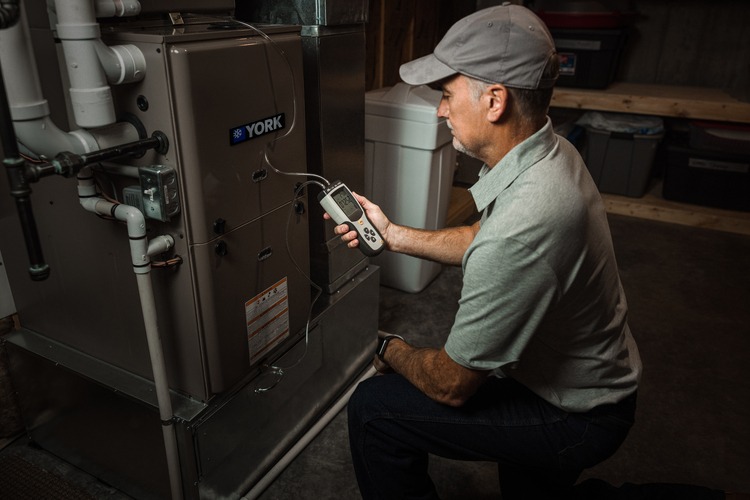
Start by describing the problem in your own words. Useful details include when it began, whether it happens every cycle, which rooms are affected, and whether a filter change, thermostat adjustment, or remodeling project preceded it. Intermittent failures may not appear continuously during the appointment, so those observations can help focus testing.
The appropriate diagnostic checks depend on the furnace design and symptoms. They may include:
- Checking the thermostat request for heat and the furnace’s response.
- Observing startup, ignition, heating, blower operation, and shutdown.
- Inspecting filter condition and supply and return airflow.
- Evaluating relevant electrical connections, controls, and components.
- Checking ignition and flame-sensing operation on a gas furnace.
- Evaluating safety-control responses and venting concerns.
- Checking heating performance after the recommended repair.
The findings should connect the symptom to its cause and explain what the proposed work addresses. If a duct restriction or another separate condition contributed to the failure, discuss that as well. Replacing a failed component without addressing a contributing problem can leave the system struggling.
What Can You Check Before Calling?
For an ordinary loss-of-heat complaint without a suspected safety concern, a few simple observations may help. Confirm that the thermostat is set to heat and the temperature setting is above the room temperature. Check whether thermostat batteries need replacement, if your model uses them. Review the filter according to the equipment instructions, and make sure furniture or rugs are not blocking accessible registers and return grilles.
Note any visible display message without opening the furnace cabinet. Leave wiring, burner adjustments, gas components, internal cleaning, and safety-control testing to a qualified technician. Do not bypass a safety switch or repeatedly reset a furnace that shuts down.
If you smell gas or a carbon monoxide alarm activates, leave the home and contact the gas utility or emergency responders from outside. Those situations require immediate attention rather than routine troubleshooting.
Heating Repair for Piedmont’s Older and Hillside Homes
Piedmont’s mix of older homes, remodeled properties, and hillside layouts makes air distribution an important part of heating diagnosis. Near Piedmont Park, along Moraga Avenue, and in multi-level homes, comfort can vary with room layout, window exposure, insulation, and the route of the ductwork. These property conditions matter more than assuming every cold room has the same cause.
A furnace may still serve ductwork installed for an earlier floor plan. An added bedroom or converted space can change heating demand without a corresponding change to the supply and return system. If the main rooms warm normally but an addition remains cold, replacing a furnace part may not correct the distribution issue.
Cool East Bay mornings and winter evenings can also reveal problems after months of limited heating use. Mention whether the complaint appeared on the first seasonal startup or developed gradually. That history helps distinguish a new operating fault from a longstanding comfort limitation.
What Affects Furnace Repair Cost and Timing?
The failed component, equipment design, accessibility, parts availability, and amount of diagnostic work affect repair cost. A thermostat issue and a failed blower motor involve different work. An intermittent shutdown may require more investigation than a component that has stopped operating completely.
Ask what the diagnostic appointment covers, what the proposed repair includes, and whether additional testing or separate work would change the price. Repair timing also depends on whether the required part is available and whether another condition needs correction. Describe a complete loss of heat when requesting service so the scheduling team understands your situation.
Should You Repair or Replace the Furnace?
An older furnace does not automatically need replacement. An isolated fault may be worth repairing when the rest of the equipment remains in suitable condition and replacement parts are available. Consider the repair history, safety findings, overall condition, and ability to heat the home alongside age.
Replacement deserves discussion when repairs recur, a major component has failed, or the equipment no longer meets the home’s needs. If replacement is appropriate, furnace installation should account for heating demand, ductwork, controls, and startup testing. New equipment alone will not resolve every airflow or insulation problem.
Preventive Heating Care After a Repair
Repair addresses an active fault; preventive maintenance reviews a system’s condition and operation. Once the immediate problem is resolved, furnace maintenance can help identify cleaning needs, airflow restrictions, and operating changes that deserve attention.
Maintenance cannot prevent every failure or guarantee lower heating bills. Follow the equipment instructions for filter care, keep air pathways clear, and report changes in startup, noise, or room comfort. These observations support ongoing service without replacing professional inspection.
Schedule Furnace Repair with Harry Clark
Harry Clark’s heating and air conditioning work includes furnaces, thermostats, ductwork, and related comfort equipment. That broader scope is useful when a heating complaint involves both the furnace and the system distributing warm air through the home.
Call (510) 444-1960 or contact Harry Clark Heating & Air Conditioning to arrange service in Piedmont. Share the symptoms, equipment information if available, and any recent changes so the appointment starts with a clear understanding of your heating concern.
Furnace Repair Questions
Why does my furnace start and then shut off?
The cause may involve ignition, flame sensing, restricted airflow, overheating, or another control response. The point at which the startup or heating sequence stops helps guide diagnosis. Avoid repeatedly resetting the system while the cause remains unresolved.
Can furnace repair fix a cold upstairs bedroom?
It can if a blower or furnace operating problem is limiting heat delivery. A cold bedroom can also result from duct restrictions, limited return air, insulation, or thermostat placement. The furnace and distribution system may both need evaluation.
Does a higher heating bill mean the furnace needs replacement?
No. Weather, thermostat schedules, insulation, air leakage, and equipment operation can all affect energy use. A higher bill is a reason to investigate changes, but it does not establish that replacement is necessary.
Is a furnace tune-up the same as a repair appointment?
No. A tune-up provides preventive inspection and maintenance. A repair appointment investigates an active symptom such as no heat, unusual noise, or repeated shutdowns. Describe the problem when scheduling so the service request reflects what you need.
What should I ask before approving a furnace repair?
Ask what failed, what the proposed work includes, whether another condition contributed to the problem, and how operation will be checked afterward. Discuss parts availability, timing, and any applicable warranty coverage before authorizing the work.
Schedule Furnace Repair


 Trustindex verifies that the original source of the review is Google.
 Trustindex verifies that the original source of the review is Google.
 Trustindex verifies that the original source of the review is Google.
 Trustindex verifies that the original source of the review is Google.

 Trustindex verifies that the original source of the review is Google.
 Trustindex verifies that the original source of the review is Google.
 Trustindex verifies that the original source of the review is Google.