

Heat Pump Repair in San Leandro, CA
A heat pump may continue running even when it is no longer heating or cooling the home properly. The first warning could be a room that never reaches the thermostat setting, an unfamiliar sound from the outdoor unit, weak airflow, or a system that suddenly refuses to change modes.
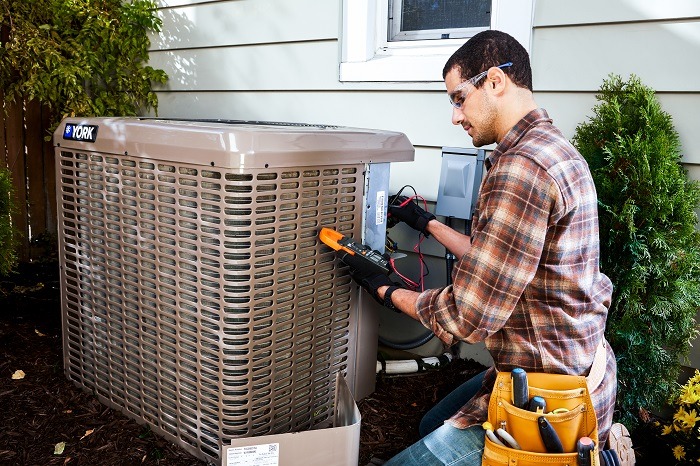
Harry Clark Heating & Air Conditioning provides professional heat pump repair in San Leandro, CA for homeowners who want accurate diagnostics and a clear explanation of what their equipment needs. Our technicians evaluate the system before recommending a repair, helping separate an equipment failure from an airflow, thermostat, electrical, or duct-related problem.
Because a heat pump provides both heating and cooling, one developing problem can affect comfort in different ways throughout the year. Prompt diagnosis can help prevent unnecessary operating strain and determine whether the problem requires a straightforward repair or a larger system decision.
Heat Pump Problems Require Careful Diagnosis
Many heat-pump symptoms have more than one possible cause. A system that blows cool air during heating operation might have a thermostat problem, restricted airflow, outdoor-unit failure, reversing-valve issue, refrigerant concern, or defrost problem. Weak cooling could involve the indoor coil, outdoor coil, blower, electrical controls, refrigerant performance, or duct system.
Replacing a component based only on the visible symptom can leave the original problem unresolved. Diagnostic testing should identify how the heat pump is operating and which condition is preventing it from performing correctly.
Harry Clark’s broader heating and air conditioning services in San Leandro consider the equipment, airflow, controls, ductwork, and home together. This is especially important when a comfort complaint affects only certain rooms or appears under specific outdoor conditions.
Signs Your Heat Pump May Need Repair
Heat-pump failures are not always immediate. Some develop gradually and become noticeable only when outdoor conditions place greater demand on the equipment.
Schedule a professional inspection when you notice:
- The heat pump runs without reaching the thermostat setting
- Supply air remains cool during heating operation
- The system produces warm or insufficiently cool air in cooling mode
- The equipment starts and stops more frequently than usual
- Airflow from the supply registers becomes noticeably weaker
- One part of the home remains uncomfortable while other rooms feel normal
- The outdoor unit develops heavy ice that does not clear
- The system will not change between heating and cooling modes
- You hear buzzing, grinding, rattling, clicking, or other unfamiliar sounds
- Water appears near the indoor equipment or condensate drain
- The thermostat loses power, displays an error, or responds inconsistently
- Electricity use increases without an obvious change in weather or household activity
A light layer of frost on the outdoor coil can occur during cool, damp weather. A properly operating heat pump should periodically enter a defrost cycle to clear it. Heavy ice that remains, repeatedly returns, or interferes with the outdoor fan is not a condition homeowners should try to correct by scraping or chipping the coil.
Heat Pump Performance in San Leandro Homes
San Leandro’s generally moderate conditions are well suited to heat-pump operation, but cooling and heating demands can still vary across the city. Homes closer to the bay may experience cool, damp mornings, while properties farther inland or exposed to afternoon sun can warm more quickly later in the day.
Homes in Broadmoor, Estudillo Estates, Washington Manor, Marina Faire, Bay-O-Vista, and other San Leandro neighborhoods also vary in age, insulation, window area, duct design, and remodeling history. An addition or converted room may not have been included in the original airflow plan, and older ducts may not deliver air evenly to every part of the home.
When some rooms remain uncomfortable, installing a larger component or adjusting the thermostat may not correct the cause. Airflow, return-air capacity, duct leakage, insulation, and room exposure may need to be considered alongside heat-pump operation.
What May Be Checked During Heat Pump Diagnosis?
The diagnostic process depends on the symptoms and equipment design. A professional evaluation may include checking:
- Thermostat settings, wiring, and control signals
- Air-filter condition and system airflow
- Indoor and outdoor coil condition
- Blower and outdoor fan operation
- Electrical connections and components
- System temperatures and operating pressures
- Refrigerant performance
- Reversing-valve operation
- Defrost sensors and controls
- Condensate drainage
- Duct conditions related to the comfort complaint
- Operation in heating and cooling modes when appropriate
Once the cause is identified, the technician can explain what failed, whether another condition contributed to the problem, and what the recommended repair is intended to correct.
Common Heat Pump Repair Needs
Heat pumps combine refrigeration, electrical, airflow, drainage, and control components. A problem in any of these areas can reduce comfort or prevent the system from operating. The appropriate repair depends on the results of diagnostic testing rather than the symptom alone.
Airflow Restrictions and Coil Problems
Restricted airflow can reduce heating and cooling capacity, increase operating time, and contribute to coil icing. Possible causes include a dirty filter, blocked return, blower problem, dirty indoor coil, closed register, or duct restriction.
Outdoor debris and coil damage can also interfere with heat transfer. The technician should determine whether cleaning, airflow correction, component repair, or additional testing is needed.
Electrical and Control Failures
Capacitors, contactors, relays, sensors, circuit boards, motors, wiring, and other electrical components help the heat pump start, change modes, and continue operating. Deterioration may cause intermittent operation, repeated clicking, unexpected shutdowns, or a system that will not start.
A breaker that repeatedly trips should not simply be reset without investigating the cause. The problem could involve wiring, a motor, a compressor, or another electrical condition requiring professional attention.
Defrost and Reversing-Valve Problems
During cool weather, the outdoor coil may develop frost. Defrost sensors and controls allow the system to temporarily change operation and clear that frost. A problem with the controls, outdoor fan, sensor, or another component can allow ice to continue accumulating.
The reversing valve changes the direction of refrigerant flow so the heat pump can provide heating or cooling. A valve or control problem may prevent the system from changing modes or leave it operating in the wrong mode.
Refrigerant Performance
Refrigerant problems may result in long operating cycles, reduced capacity, icing, or poor temperature control. Refrigerant is not normally consumed during heat-pump operation. If the charge is low, the system should be evaluated for a possible leak instead of being refilled without further investigation.
Condensate and Drainage Problems
During cooling operation, moisture collected at the indoor coil must drain away from the equipment. A restricted drain, damaged pan, pump problem, or installation issue can cause water to collect near the system. Drainage problems should be addressed before they damage the surrounding area.
Heating-Mode and Cooling-Mode Problems
A heat pump may perform correctly in one mode while struggling in the other. A homeowner might have dependable cooling during warmer weather and discover a reversing-valve, defrost, thermostat, or outdoor-unit problem when heating is needed.
The opposite can occur when a system heats properly but produces weak cooling. Testing the equipment in the affected mode helps isolate the problem. When appropriate, operation in the opposite mode may also be checked to confirm that the system changes over and responds correctly.
Should You Repair or Replace Your Heat Pump?
Not every heat-pump failure requires replacement. Repair may be the practical choice when the problem is isolated, the needed part is available, and the system has otherwise provided reliable comfort.
Replacement may deserve consideration when the equipment has experienced repeated failures, requires a major component, uses parts that are becoming difficult to obtain, or no longer provides acceptable heating and cooling. The condition of the ducts, electrical system, indoor equipment, and controls should also be considered.
A balanced decision should account for:
- The cause and cost of the current repair
- The system’s age and overall condition
- Recent repair history
- Availability of replacement parts
- Heating and cooling performance
- Noise and operating condition
- Ductwork and airflow limitations
- Expected length of ownership
- Whether replacement would correct the underlying problem
If replacement offers better long-term value, Harry Clark Heating & Air Conditioning can explain the available options for heat pump installation in San Leandro. The recommendation should account for the home’s heating and cooling loads, duct capacity, electrical requirements, equipment features, and homeowner priorities.
A single repair on an otherwise dependable system does not automatically justify replacement. Diagnosis should come before the decision.
Protecting Your Heat Pump After a Repair
A repair corrects a specific problem, while ongoing care helps the heat pump operate under appropriate conditions. Homeowners can support airflow and equipment access by checking filters regularly, keeping supply and return vents unobstructed, and removing loose debris from around the outdoor unit.
Pay attention to changes in sound, airflow, temperature, operating time, or electricity use. If the original symptom returns, note when it occurs and whether the system is heating or cooling. That information can make an intermittent problem easier to trace.
Professional maintenance may include inspecting coils, electrical components, drainage, controls, airflow, and operation in both modes. The appropriate schedule depends on system use, household conditions, filter loading, and manufacturer guidance.
Why Choose Harry Clark for Heat Pump Repair?
Harry Clark Heating & Air Conditioning provides heat-pump service for homeowners in San Leandro and throughout the East Bay. Our repair approach is based on careful troubleshooting, straightforward explanations, and recommendations tied to the actual condition of the system.
Heat-pump problems can involve refrigeration, airflow, electrical components, controls, drainage, ductwork, or several conditions at once. We evaluate the equipment in the context of the complete comfort system so the recommended repair addresses the cause rather than only the visible symptom.
After the evaluation, we explain what was found, what the repair is intended to correct, and whether another condition should be repaired or monitored. If replacement is being considered, homeowners receive information that helps them compare the options without assuming every breakdown requires new equipment.
Schedule Heat Pump Repair in San Leandro
If your heat pump is not heating, cooling, changing modes, or operating as expected, Harry Clark Heating & Air Conditioning can help identify the cause and explain the available repair options.
Call (510) 444-1960 or use the online contact form to schedule heat pump repair in San Leandro, CA.
Frequently Asked Questions About Heat Pump Repair
Why is my heat pump blowing cool air in heating mode?
Heat-pump air can feel cooler than furnace air during normal operation. If the indoor temperature is falling, possible causes include restricted airflow, thermostat trouble, outdoor-unit failure, a refrigerant problem, or an incomplete heating sequence.
Is frost on the outdoor heat pump normal?
A light layer of frost can develop during cool, damp weather. The system should periodically enter a defrost cycle to clear it. Heavy ice that remains or repeatedly returns should be professionally evaluated.
Should I turn off a heat pump covered in ice?
If heavy ice is restricting the outdoor unit or interfering with the fan, continued operation may worsen the problem. Do not chip or scrape the coil. Contact an HVAC professional for guidance and inspection.
Why won’t my heat pump switch between heating and cooling?
Possible causes include thermostat settings, control wiring, a reversing-valve problem, sensor trouble, or another electrical or refrigerant-related condition. Diagnostic testing is needed to identify the cause.
How much does heat pump repair cost?
Cost depends on the failure, testing required, replacement part, equipment design, and whether another condition contributed to the problem. Diagnosis is necessary before the repair can be priced accurately.
How do I know whether to repair or replace my heat pump?
Consider the system’s age, repair history, equipment condition, part availability, comfort, and the cost of the proposed repair. An isolated repair on an otherwise reliable system does not automatically justify replacement.
Schedule Heat Pump Repair