

Mini Split Maintenance in San Leandro, CA
A ductless mini split may provide both heating and cooling, which means it can operate during more than one season. Filters collect airborne material, indoor units move room air across a coil, outdoor equipment exchanges heat, and condensate must drain correctly during cooling operation. Changes in any of these areas can affect comfort and system behavior.
Harry Clark Heating & Air Conditioning provides mini split maintenance in San Leandro, CA, for residential and commercial properties. Maintenance creates an opportunity to evaluate an operating system, address routine care needs, and identify developing concerns before they become more disruptive.
For broader local HVAC information, visit Harry Clark’s heating and air conditioning services in San Leandro. Property owners with an active system problem should use the mini split repair page. Those planning new equipment can review mini split installation in San Leandro.
Why Does Mini Split Maintenance Matter?
Mini splits depend on airflow, heat transfer, drainage, controls, electrical operation, and communication between indoor and outdoor components. A system may continue running even as airflow becomes restricted or operating behavior begins to change. Routine maintenance provides a chance to look at the system before a noticeable comfort problem becomes the only indication that something needs attention.
Maintenance may help support:
- Consistent airflow from indoor units
- Normal response to controllers and temperature settings
- Proper condensate movement during cooling operation
- Earlier recognition of unusual sounds or operating changes
- Preparation for periods of regular heating or cooling use
- A clearer understanding of the equipment’s current condition
Maintenance cannot guarantee a particular efficiency improvement, prevent every breakdown, or determine how long equipment will last. Its value is in evaluating current operation and identifying conditions that may require care, monitoring, or separate diagnostic repair.
What Should Mini Split Maintenance Consider?
Not every mini split system is configured the same way. A single-zone system serving one room has different access and operating conditions from a multi-zone system with several indoor units. Equipment age, installation, room use, service history, and the number of operating seasons can all affect what deserves attention.
As a general matter, maintenance may consider filters, airflow, accessible indoor and outdoor equipment, coil condition, blower operation, condensate drainage, controls, sensors, electrical connections, system communication, mounting conditions, and overall heating and cooling response.
This is not a universal Harry Clark checklist or a promise that every appointment includes identical tasks. The appropriate work depends on the equipment and conditions found at the property. If the system has an active malfunction, additional diagnostic testing may be needed beyond routine maintenance.
Filters and Airflow Need Regular Attention
Indoor units draw room air through filters before moving conditioned air back into the space. As material collects on the filters, airflow can become restricted. The effect may appear as weaker air movement, longer run times, more noticeable sound, or a room that takes longer to reach the selected temperature.
Filter needs vary with system use and indoor conditions. A frequently occupied room, home with pets, commercial workspace, or area exposed to more airborne material may need attention more often than a lightly used guest room. One fixed schedule does not fit every property.
Filters are only one part of airflow. The blower, accessible coil surfaces, discharge direction, furniture placement, curtains, shelving, and other room conditions can affect circulation. Maintenance should consider whether the indoor unit can move air freely through the space rather than assuming every comfort complaint begins with the filter.
Indoor and Outdoor Equipment Work Together
The indoor unit and outdoor equipment are part of one system. An indoor unit may appear clean and responsive while outdoor airflow or another shared condition limits performance. Maintenance should therefore consider the components that work together instead of focusing only on the equipment that is easiest to see.
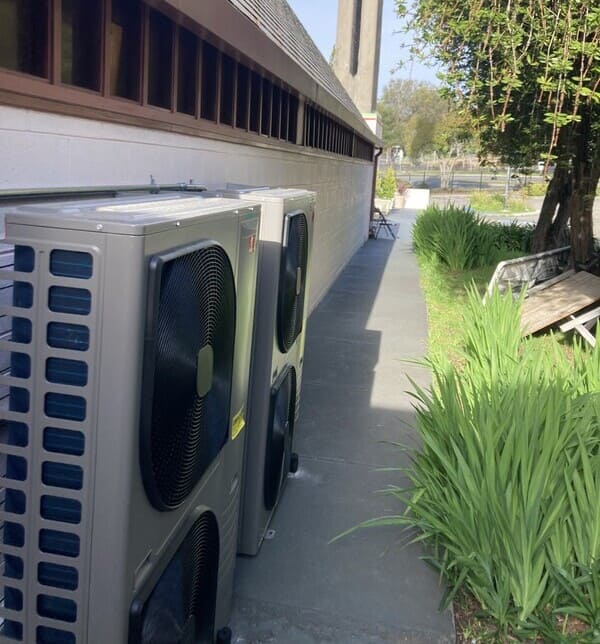
Outdoor-unit placement can affect exposure to leaves, debris, vegetation, and other obstructions. The equipment also needs suitable airflow and reasonable service access. Changes around the property, such as new storage, fencing, landscaping, or construction, can alter conditions after installation.
Indoor units should remain securely mounted and reasonably accessible. Changes to furniture, cabinets, window treatments, or room use can interfere with airflow or make normal care more difficult. Maintenance can help identify these practical conditions before they contribute to a larger comfort complaint.
Why Condensate Drainage Matters
During cooling operation, a mini split removes moisture from indoor air. That condensate must move through a drain path and discharge correctly. Drainage problems may appear as dripping water, staining, moisture near the indoor unit, or water entering a wall or finished surface.
Routine care provides an opportunity to consider accessible drainage conditions before a visible leak develops. Drain routing, slope, connections, obstructions, and pumps where used can all influence how water moves away from the equipment.
Maintenance cannot correct every drainage defect automatically. A damaged, disconnected, poorly routed, or inaccessible drain may require separate corrective work. If water is already entering the building, the system has an active problem and should be treated as a repair request rather than ordinary maintenance.
Controls and Operating Modes Should Respond Normally
Many ductless systems provide several operating modes, fan settings, schedules, or controller options. Maintenance can include observing whether the system responds normally to available controls and whether indoor units communicate as expected with the rest of the equipment.
A setting issue can sometimes look like an equipment problem. A unit in the wrong mode, an unexpected schedule, or a controller setting may produce results that differ from what the occupant intended. At the same time, repeated loss of communication, unexplained shutdowns, or error codes can indicate a condition that needs diagnosis.
Property owners can help by describing how they normally operate the system. Note whether settings are changed manually, controlled through a schedule, or managed differently in separate zones. This information provides context for evaluating system response.
Multi-Zone Mini Splits Require Zone-by-Zone Attention
A multi-zone system may have several indoor units connected to shared outdoor equipment. Each indoor unit serves a space with its own filter, airflow conditions, usage pattern, and room load. One zone may operate daily while another is used only occasionally.
Maintenance should account for those differences. A unit in a kitchen, office, primary bedroom, or busy commercial area may experience different conditions from a unit in a guest room. Comparing airflow, sound, control response, and comfort between zones can help identify whether a concern is local or shared.
If one zone performs differently, record what you notice. If every zone changes at the same time, that information can also help distinguish an indoor-unit concern from a condition involving shared equipment or controls.
How Often Should Mini Split Maintenance Be Scheduled?
The appropriate maintenance schedule depends on how the equipment is used. A mini split that provides both heating and cooling may operate during much of the year. A system serving a lightly used room may accumulate less operating time, while equipment in a home office, commercial space, or primary living area may run more frequently.
Annual professional maintenance is a common starting point, but filters and basic homeowner observations may need attention more often. Equipment guidance, indoor conditions, occupancy, pets, outdoor exposure, and prior service findings can all influence the schedule.
San Leandro’s moderate conditions can still require both heating and cooling at different times. Scheduling before a period of heavier use provides an opportunity to evaluate the system before it becomes central to daily comfort.
Maintenance and Repair Are Not the Same Service
Maintenance is intended for equipment that is generally operating. Repair is appropriate when the system has an active malfunction, such as no heating or cooling, a water leak, repeated error code, electrical problem, unexplained shutdown, or new operating sound.
If the equipment is not working correctly, use Harry Clark’s San Leandro mini split repair service. Diagnostic repair focuses on identifying the cause of the failure and determining what corrective work may be appropriate.
Maintenance may reveal a condition that deserves diagnosis, but it should not be presented as a substitute for repair. Describing the system’s current behavior when scheduling helps determine which type of appointment fits the situation.
When Should Installation or Replacement Be Considered?
Maintenance can provide useful observations about existing equipment, but it cannot correct every capacity, placement, drainage, electrical, or installation problem. A system may operate while still failing to meet the needs of a room because the equipment or layout does not fit the space.
Replacement should not be based on age alone. Repair history, equipment condition, available components, comfort, sound, installation quality, room use, and the scope of any needed corrective work all matter.
If the property needs a new system, added zone, or redesigned layout, review mini split installation in San Leandro. Planning should account for room loads, indoor-unit placement, outdoor-unit location, electrical requirements, line routing, drainage, controls, and future service access.
What Can Property Owners Do Between Visits?
Observe the system and follow the equipment guidance available for routine homeowner care. Note changes in airflow, sound, drainage, controller response, or the time required to change the room temperature. Check whether furniture, curtains, storage, plants, or other objects interfere with indoor or outdoor airflow.
Do not open electrical compartments, handle refrigerant components, bypass controls, or disassemble equipment beyond ordinary homeowner-accessible care. If the system leaks water into the building, repeatedly shuts down, displays an error, or no longer heats or cools, request repair instead of continuing to operate it as though only routine maintenance were needed.
Frequently Asked Questions About Mini Split Maintenance
How often should mini split filters be checked?
The appropriate frequency depends on equipment use and indoor conditions. Frequently used rooms, properties with pets, and spaces exposed to more airborne material may require filter attention more often than lightly used areas.
Do mini splits need maintenance if they are used only for cooling?
Yes. Cooling operation still depends on airflow, heat transfer, controls, outdoor equipment, and condensate drainage. The maintenance schedule should reflect how often the system operates and the conditions around the equipment.
Can maintenance stop a mini split from leaking water?
Routine care may identify accessible drainage concerns, but an existing leak is an active repair issue. A damaged, disconnected, restricted, or improperly routed drain may require corrective work beyond maintenance.
Can mini split maintenance prevent every repair?
No. Maintenance may reveal developing concerns and support normal operating conditions, but it cannot guarantee that a component will not fail or that the system will never require repair.
Should every indoor unit in a multi-zone system be maintained?
Each indoor unit has its own airflow conditions, filter, blower, controls, and room environment. Maintenance should account for each zone as well as the outdoor equipment shared by the system.
Request Mini Split Maintenance in San Leandro
Harry Clark Heating & Air Conditioning helps San Leandro homeowners and businesses evaluate operating mini split systems and prepare them for continued heating and cooling use. Share any recent changes in airflow, sound, drainage, or control response when requesting an appointment.
Schedule Mini Split Maintenance


 Trustindex verifies that the original source of the review is Google.
 Trustindex verifies that the original source of the review is Google.
 Trustindex verifies that the original source of the review is Google.
 Trustindex verifies that the original source of the review is Google.

 Trustindex verifies that the original source of the review is Google.
 Trustindex verifies that the original source of the review is Google.
 Trustindex verifies that the original source of the review is Google.