

Air Conditioning Repair in Alameda, CA
When your air conditioner stops cooling properly, the first step is figuring out why. Harry Clark Heating & Air Conditioning provides professional air conditioning repair in Alameda, CA, with a focus on careful diagnosis, practical recommendations, and restoring reliable comfort without guessing at the problem.
Cooling issues can come from electrical components, airflow restrictions, thermostat controls, refrigerant performance, dirty coils, drainage problems, worn motors, or several conditions occurring at the same time. Our technicians evaluate the system, explain what they find, and recommend repairs based on the actual condition of the equipment.
As part of our heating and air conditioning services in Alameda, we work on cooling systems in homes throughout the city, including older properties, remodeled homes, and newer neighborhoods with different airflow and comfort demands.
Common Air Conditioning Problems We Repair
Air conditioning problems do not always begin with a complete system failure. Many start with changes in comfort or operation that become more noticeable over time.
Common AC problems we diagnose in Alameda homes include:
- Warm or room-temperature air coming from the vents
- Weak or inconsistent airflow
- Air conditioner running but not cooling the home
- System that will not turn on
- Short cycling or repeated starting and stopping
- Frozen evaporator coils or ice on refrigerant lines
- Water or condensate around indoor equipment
- Unusual buzzing, rattling, grinding, or clicking sounds
- Burning or electrical odors
- Outdoor unit that is not running correctly
- Long operating cycles without enough temperature change
- Higher cooling costs without a clear explanation
These symptoms can have several possible causes. That is why good AC repair starts with diagnosis rather than replacing parts based only on the first visible problem.
Air Conditioner Running but Not Cooling?
An air conditioner can appear to be operating normally while still failing to cool the home adequately. The blower may be running, air may be moving through the vents, and the thermostat may be calling for cooling, yet indoor temperatures continue to rise.
Possible causes can include restricted airflow, dirty coils, thermostat or control problems, refrigerant-related issues, outdoor equipment problems, failing electrical components, or worn mechanical parts.
The condition of the home can also influence the symptom. Duct leakage, insulation, sun exposure, equipment sizing, and airflow balance can all affect how well the system maintains the thermostat setting.
If the air conditioner previously cooled the home well and its performance has noticeably changed, that change is worth diagnosing before the system is allowed to run for long periods under additional stress.
Weak Airflow From the Vents
Weak airflow can make an otherwise functioning air conditioner feel ineffective. Rooms farther from the air handler may stay warmer, upstairs areas may become uncomfortable, and the system may run longer while trying to reach the thermostat setting.
Airflow problems can involve dirty filters, blower components, evaporator coil restrictions, duct leakage, blocked returns, closed dampers, or other problems within the air-distribution system.
This is particularly relevant in Alameda homes where HVAC systems may have been added or modified over time. Older homes, additions, converted spaces, and remodeled floor plans can all create airflow conditions that are not solved by replacing a single component.
Short Cycling and Frequent On-Off Operation
An air conditioner that starts, runs briefly, shuts off, and then starts again may be short cycling. Frequent cycling can reduce comfort and place additional wear on electrical and mechanical components.
Possible causes include thermostat problems, airflow restrictions, electrical faults, equipment controls, refrigerant performance, or other operating conditions. Equipment sizing can also influence how frequently the system cycles.
Because several different problems can create similar behavior, identifying the cause is more useful than treating short cycling as a symptom by itself.
Frozen Air Conditioning Systems
Ice on the evaporator coil or refrigerant lines is a sign that the system is not operating normally. A frozen air conditioner may continue running while producing very little airflow or cooling.
Restricted airflow is one possible cause, but freezing can also involve blower operation, coil condition, refrigerant performance, or other system problems.
Continuing to run a visibly frozen system can allow additional ice to develop and make accurate diagnosis more difficult. Once the equipment has thawed, the underlying cause can be evaluated properly.
Electrical and Control Problems
Air conditioning systems depend on a series of electrical and control components working together. A problem with a capacitor, contactor, motor, relay, thermostat, control board, safety switch, or electrical connection can prevent the system from starting or cause abnormal operation.
Repeated breaker trips, buzzing sounds, intermittent operation, or an outdoor unit that attempts to start but cannot remain running can all point to electrical or control problems that should be diagnosed before the system is used further.
Replacing a failed electrical component may restore operation, but it is also important to understand whether another condition contributed to the failure.
Water Leaks and Condensate Problems
Air conditioners remove moisture from indoor air as they cool the home, and that moisture needs to drain properly. When the condensate system becomes clogged, damaged, or misaligned, water can collect around the indoor equipment or leak into nearby areas.
Condensate problems can involve drain lines, drain pans, pumps, switches, or other components associated with moisture removal. In some cases, water around the system can also be related to a frozen coil that has begun to thaw.
Because water can damage surrounding materials, condensate problems should be addressed before they become larger issues.
Unusual Noises or Odors
Changes in sound or smell can provide useful clues about what is happening inside an air conditioning system.
Buzzing, clicking, rattling, grinding, or screeching can be related to electrical components, motors, fans, loose parts, bearings, or other mechanical conditions. Burning or electrical odors should be taken seriously, particularly when they occur along with breaker trips or abnormal system operation.
Musty odors can sometimes be associated with moisture, drainage, filtration, or airflow conditions. The correct response depends on where the odor is coming from and what the system is doing at the time.
Refrigerant and Cooling Performance Problems
Refrigerant is part of the system that transfers heat out of the home. When cooling performance is abnormal, refrigerant operation may be one of several areas that need to be evaluated.
Low refrigerant should not automatically be treated as something that simply needs to be topped off. If refrigerant has been lost from a sealed system, the reason for that loss should be considered before deciding on the appropriate repair.
Cooling problems that may involve refrigerant can also resemble airflow, coil, thermostat, compressor, or control issues, which is why the entire operating condition needs to be evaluated rather than diagnosing the system from one symptom alone.
Compressor and Outdoor Unit Problems
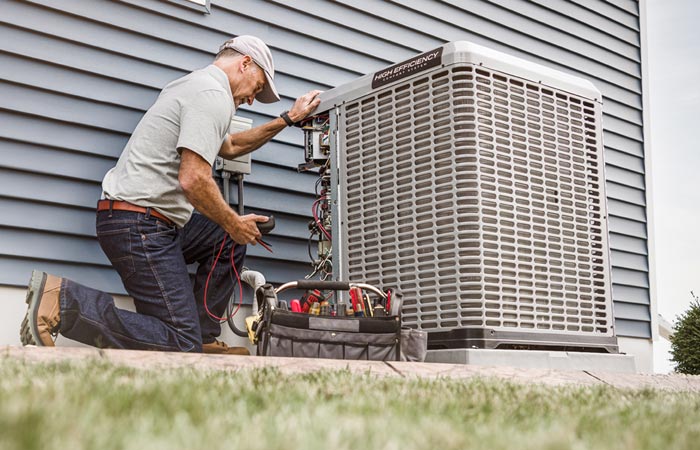
The outdoor unit contains components that are essential to the cooling process. If the condenser fan, compressor, electrical components, or controls are not operating correctly, the indoor blower may continue running even though the system is no longer removing heat effectively.
Outdoor equipment can also be affected by debris, coil condition, electrical wear, and exposure to weather over time.
In Alameda, coastal air can add another consideration. Outdoor HVAC equipment near the Bay may experience more moisture and salt exposure than equipment in some inland locations, which can contribute to corrosion over time.
What Happens During an AC Repair Visit?
A repair visit should answer more than the question of which part failed. The goal is to understand the complaint, verify the problem, and evaluate the relevant system conditions before recommending work.
The process may include:
- Discussing what you have noticed and when the problem began
- Checking thermostat operation and settings
- Evaluating electrical components and controls
- Checking indoor and outdoor equipment operation
- Looking at airflow and accessible system components
- Evaluating coil condition and condensate drainage
- Checking refrigerant performance when appropriate
- Looking for signs of abnormal wear, overheating, or repeated failure
Once the problem has been identified, we explain what we found and discuss the repair options before proceeding.
Repair or Replace Your Air Conditioner?
Not every AC problem means the system should be replaced. Many air conditioners can continue providing reliable service after an appropriate repair, especially when the problem is isolated and the rest of the equipment remains in reasonable condition.
Replacement becomes more worth considering when repairs are becoming frequent, the current repair is substantial, the system can no longer keep the home comfortable, or other major components are showing signs of wear.
Factors that can help guide the decision include:
- Age and overall condition of the air conditioner
- Cause and cost of the current repair
- Previous repair history
- Cooling performance before the failure
- Condition of major components
- Efficiency and operating costs
- Condition of the ductwork and airflow
- Your long-term plans for the home
If replacement is the more practical option, we can explain why and help you compare appropriate air conditioning installation and replacement options in Alameda.
AC Repair for Older Alameda Homes
Alameda has many older homes where the cooling system may have been added long after the house was originally built. Over time, ductwork may have been modified, additions may have been connected to the existing system, or remodeling may have changed how air moves through the property.
That history matters when diagnosing cooling complaints.
A mechanical repair may restore the air conditioner itself, but if certain rooms have always been difficult to cool, the underlying issue may also involve duct design, airflow, insulation, return-air capacity, or how the HVAC system was adapted to the home.
Homes in areas such as Fernside, the East End, Gold Coast, West End, Bay Farm Island, and Harbor Bay can differ significantly in construction, layout, exposure, and HVAC configuration. We consider those differences when evaluating how the system is performing.
Can an Air Conditioning Problem Wait?
Some cooling issues can be monitored briefly, while others are better addressed before the system continues operating.
Consider shutting the air conditioner off and scheduling service if you notice:
- Burning or strong electrical odors
- Repeated breaker trips
- Loud grinding, screeching, or severe mechanical noises
- Significant water leaking around indoor equipment
- Ice accumulating on the coil or refrigerant lines
- An outdoor unit repeatedly attempting to start without running normally
Gradually declining cooling, weak airflow, unusual cycling, or a room that has become harder to cool may not require immediate shutdown, but those changes are still worth investigating before the problem becomes more serious.
Why Alameda Homeowners Choose Harry Clark
Air conditioning repair should begin with understanding the problem, not assuming which component needs to be replaced. Harry Clark Heating & Air Conditioning takes a diagnostic approach to AC service so homeowners can make decisions based on what is actually happening with the system.
We look at the equipment as a complete cooling system. Depending on the problem, that can mean considering electrical components, controls, airflow, coils, refrigerant performance, drainage, ductwork, and the condition of the indoor and outdoor equipment.
Our experience working in Alameda and throughout the East Bay also helps us recognize the different conditions that can affect cooling performance in older homes, remodeled properties, homes with modified duct systems, and equipment exposed to the local coastal environment.
Once we identify the problem, we explain what we found and discuss the appropriate next step. If a practical repair can restore reliable operation, we can recommend it. If the condition of the equipment makes replacement worth considering, we can explain the factors behind that recommendation.
Schedule Air Conditioning Repair in Alameda, CA
If your air conditioner is blowing warm air, struggling to cool the house, cycling abnormally, making unusual noises, leaking water, freezing, or not turning on at all, Harry Clark Heating & Air Conditioning can help determine what is wrong.
Call (510) 444-1960 or contact Harry Clark Heating & Air Conditioning to schedule air conditioning repair in Alameda, CA.
Air Conditioning Repair FAQs
Why is my air conditioner running but not cooling my Alameda home?
An air conditioner can run without cooling properly because of restricted airflow, dirty coils, thermostat or control problems, refrigerant-related issues, outdoor equipment problems, electrical failures, or worn components. Because several problems can produce similar symptoms, diagnosis is important before deciding what needs to be repaired.
Why is my AC blowing warm air?
Warm air from the vents can be caused by thermostat settings, airflow restrictions, electrical or control problems, refrigerant performance, or a problem with the indoor or outdoor equipment. If basic thermostat and filter checks do not solve the problem, the system should be evaluated.
Should I turn off my air conditioner if it freezes?
Yes. If you see ice on the evaporator coil or refrigerant lines, turning the cooling system off allows the equipment to thaw and helps prevent additional ice buildup. Once thawed, the cause of the freezing can be diagnosed. Possible causes include restricted airflow, blower problems, coil conditions, or refrigerant-related issues.
Why does my air conditioner keep turning on and off?
Frequent starting and stopping can be related to thermostat problems, airflow restrictions, electrical components, controls, refrigerant performance, or equipment sizing. Because short cycling can increase wear on the system, the cause should be identified rather than allowing the condition to continue.
Is it better to repair or replace an older air conditioner?
That depends on the condition of the system. Age, repair cost, previous breakdowns, cooling performance, efficiency, and the condition of major components should all be considered. An older system with an isolated repair may still have useful service life, while repeated or expensive failures can make replacement more practical.
Can Alameda’s coastal environment affect outdoor AC equipment?
Coastal air can expose outdoor HVAC equipment to moisture and salt, which may contribute to corrosion over time. Equipment condition, placement, maintenance history, and the extent of exposure all matter when evaluating an outdoor unit.
Can ductwork cause AC cooling problems?
Yes. Leaking, restricted, disconnected, or poorly configured ductwork can reduce airflow and contribute to uneven temperatures even when the air conditioner itself is operating. Duct and airflow conditions are especially worth evaluating when certain rooms have always been difficult to cool.
What should I check before calling for AC repair?
You can confirm that the thermostat is set to cooling, check whether the air filter is heavily restricted, and make sure the system has power. If the equipment repeatedly trips a breaker, is frozen, produces a burning odor, or makes severe mechanical noises, avoid repeatedly restarting it and have the system evaluated.
Contact Us for AC Repair